What compounds
Software is never finished; it is between changes. Most AI tools optimize the build and leave nothing behind it: when the session ends, what remains is code and a transcript. The best agent control planes do better - an audit trail, a searchable archive of the work, sometimes a wiki distilled from the team's own discussion - but none of it is bound to the code, so the question that actually matters still has no stored answer. The intent, the decisions, the constraints, the rejected alternatives - the things the next change needs most - evaporate, and every future change begins by re-explaining the project to a fresh context window.
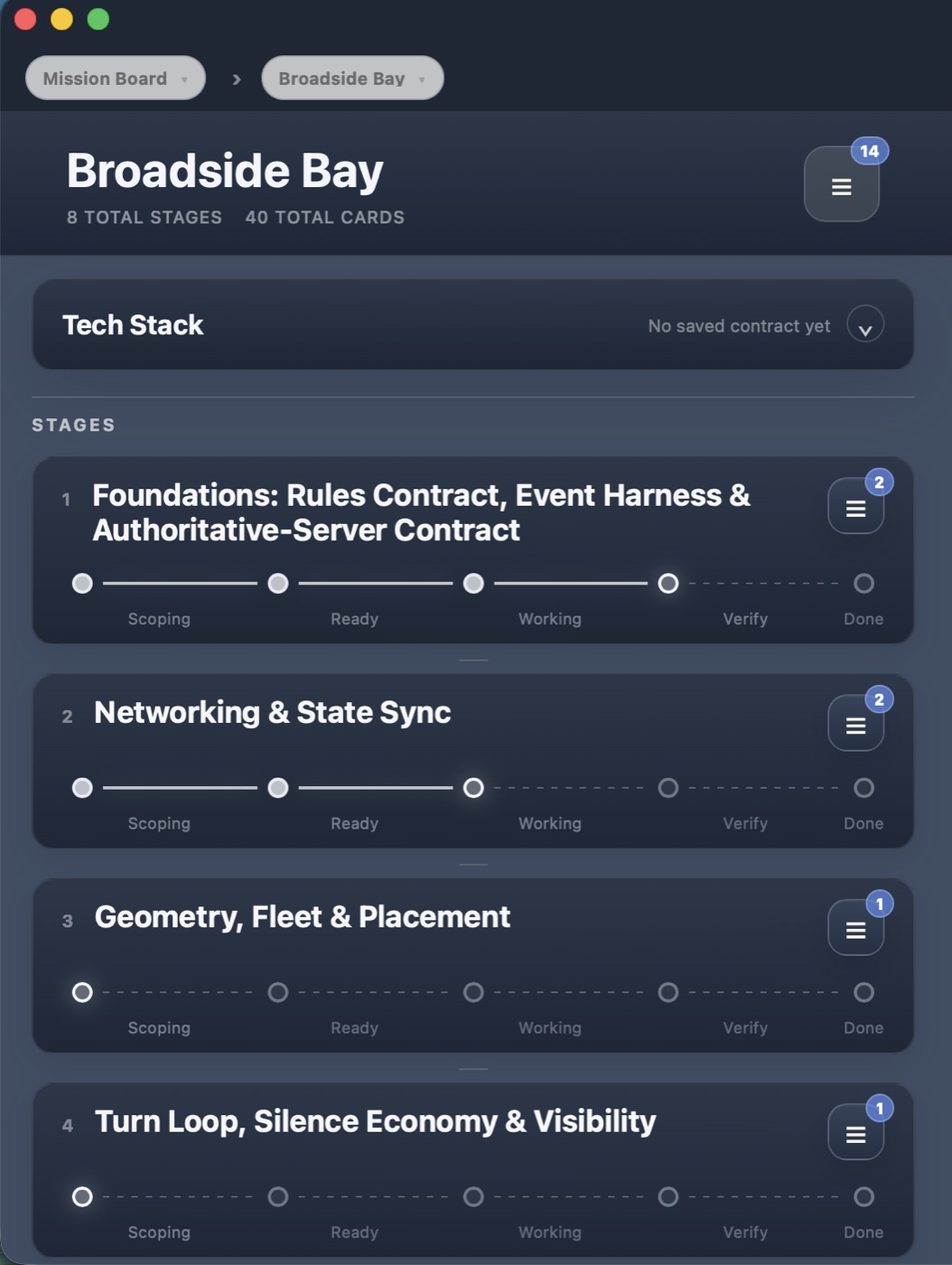
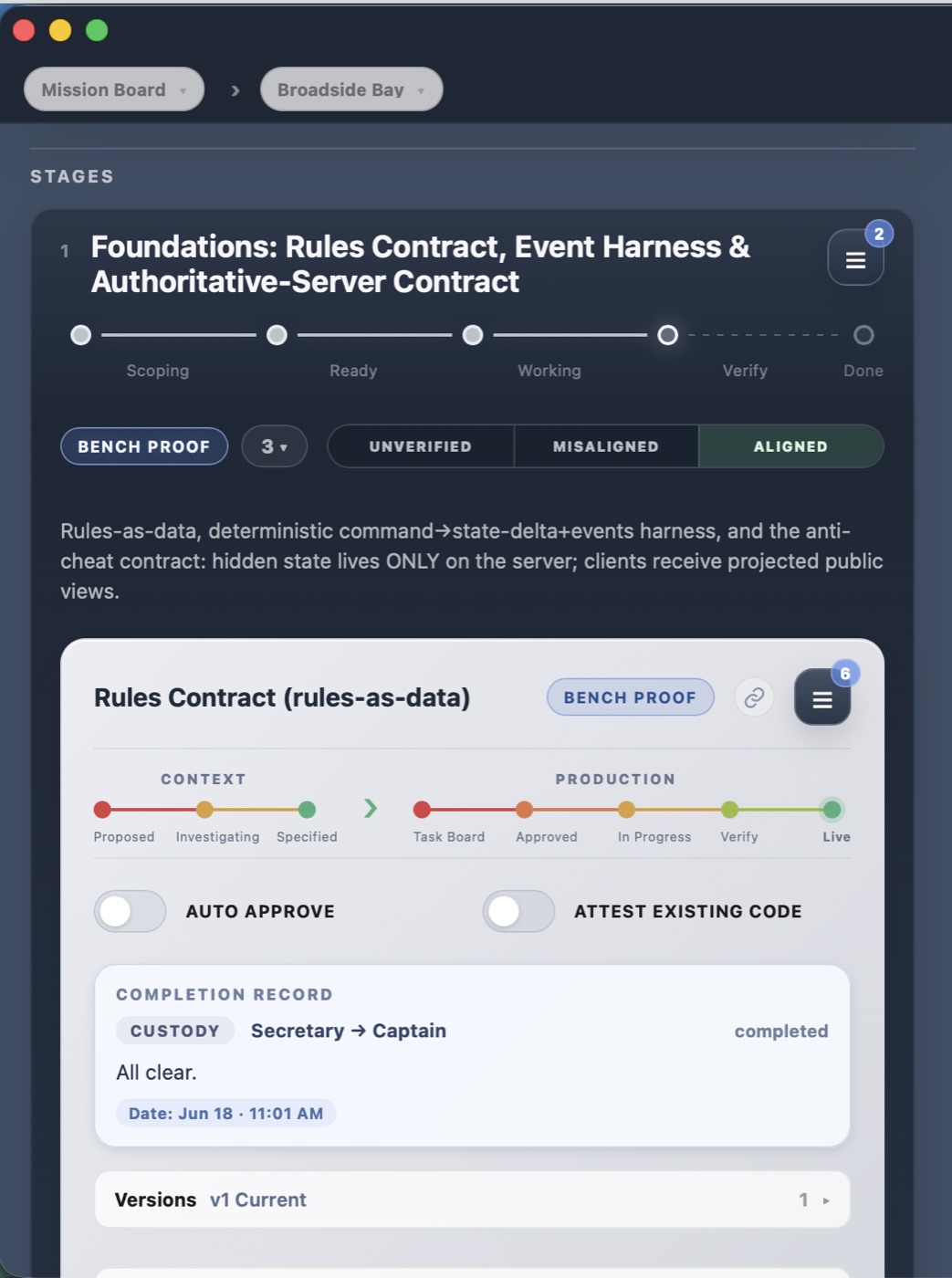
A Deckwright project accumulates instead. Work deposits its full record where it happened - at the board, at the stage, at the card - and every future change inherits it. This page shows what that deposit actually looks like on an operating board.
The board level
The stage and card level
What this means for a team
- The next change inherits. Change 41 on this board does not start from zero; it starts from forty cards of accumulated specification, decisions, and verification evidence, inherited down the board-stage-card chain.
- The next person inherits too. Onboarding is reading the board, not interviewing whoever remembers. The custody records say who approved what, when, and on what evidence.
- Audits read themselves. Every completed card carries its verification contract, its evidence, and a signed completion record. The question "why is the code like this" has a stored answer.
- The code stays regenerable. Because the record is the durable layer, the code remains its current build - downstream, replaceable, and auditable against the intent that produced it.
This is what we mean when we say the conversation is not the deliverable and the pipeline is not a conveyor. What you buy with a Deckwright project is not just the software at the end. It is the accumulated, structured, inheritable understanding of that software - and it compounds with every card that crosses the board.