
Develop context
Express, question, research, challenge, and refine what should exist.
The context development platform
Talk, point, and gesture on an open canvas where prototypes flow into production. Deckwright keeps decisions, constraints, and context intact across every agent and surface. Built for taste-driven founders, design studios, and maker teams iterating great ideas into verified, shipped software.
Express, question, research, challenge, and refine what should exist.
Promote durable decisions into governed scopes that inherit and compound.
Specify, approve, build, review, test, and verify against the same source of truth.
Code is regenerable from context. Context is not regenerable from code.
The Bridge develops thinking. The Bench shapes prototypes. The Board governs work. Artifacts move between them without forcing the crew to reconstruct the project at every handoff.
Surface one: The Bridge
Talk to one officer, several officers, or the whole crew. Forward reasoning between specialized roles, inject context without triggering a reply, and prune inaccurate material from future startup context while preserving the record.
Watch the full Bridge walkthrough ↗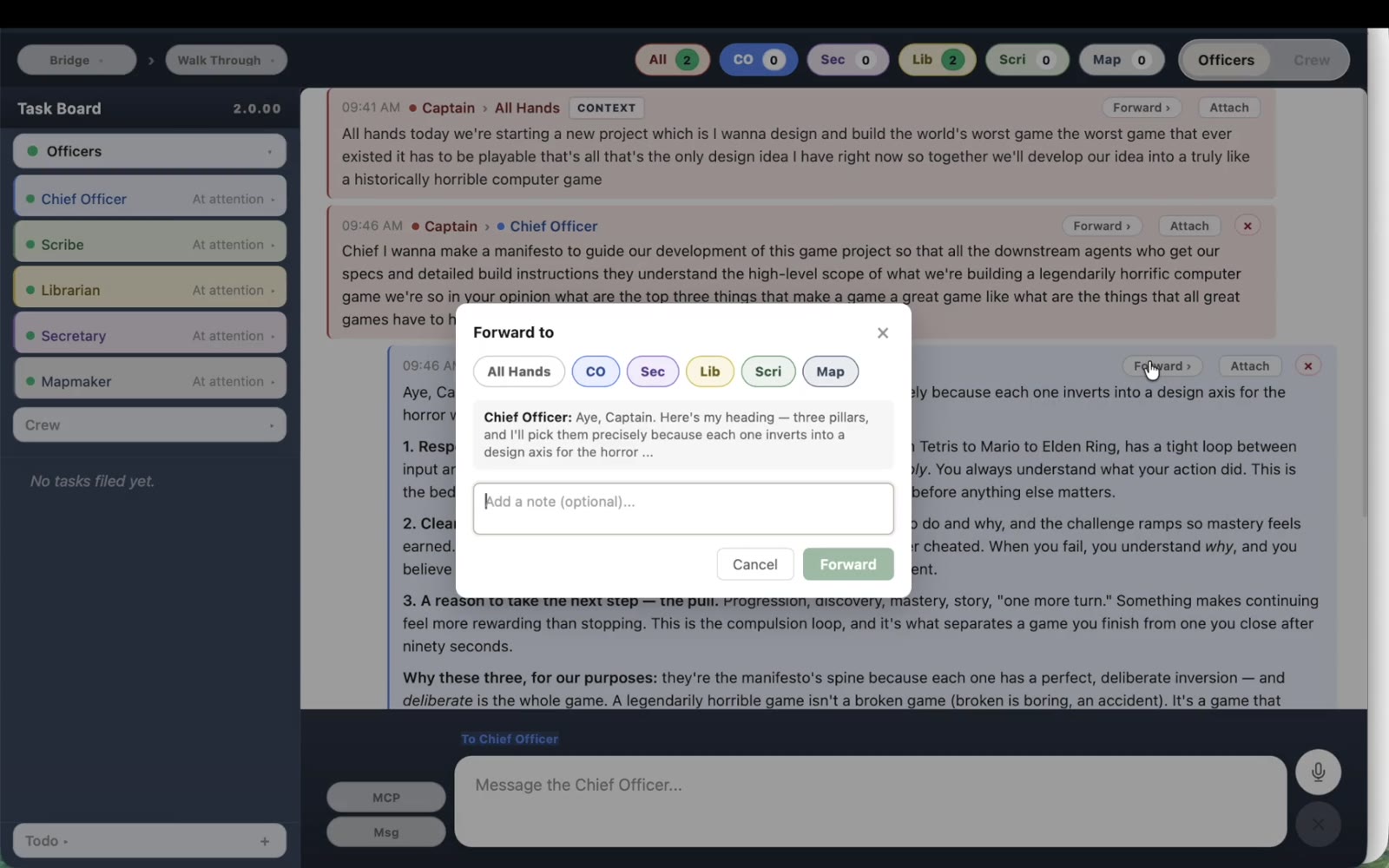
Surface two: The Bench
Desktop + iPad · full Apple Pencil support
The open canvas where prototypes take shape: talk and gesture them into being, generate imagery in the loop, work live surfaces and HTML in place - and attach any of it directly to mission cards as real, buildable context.
Watch the full Bench walkthrough ↗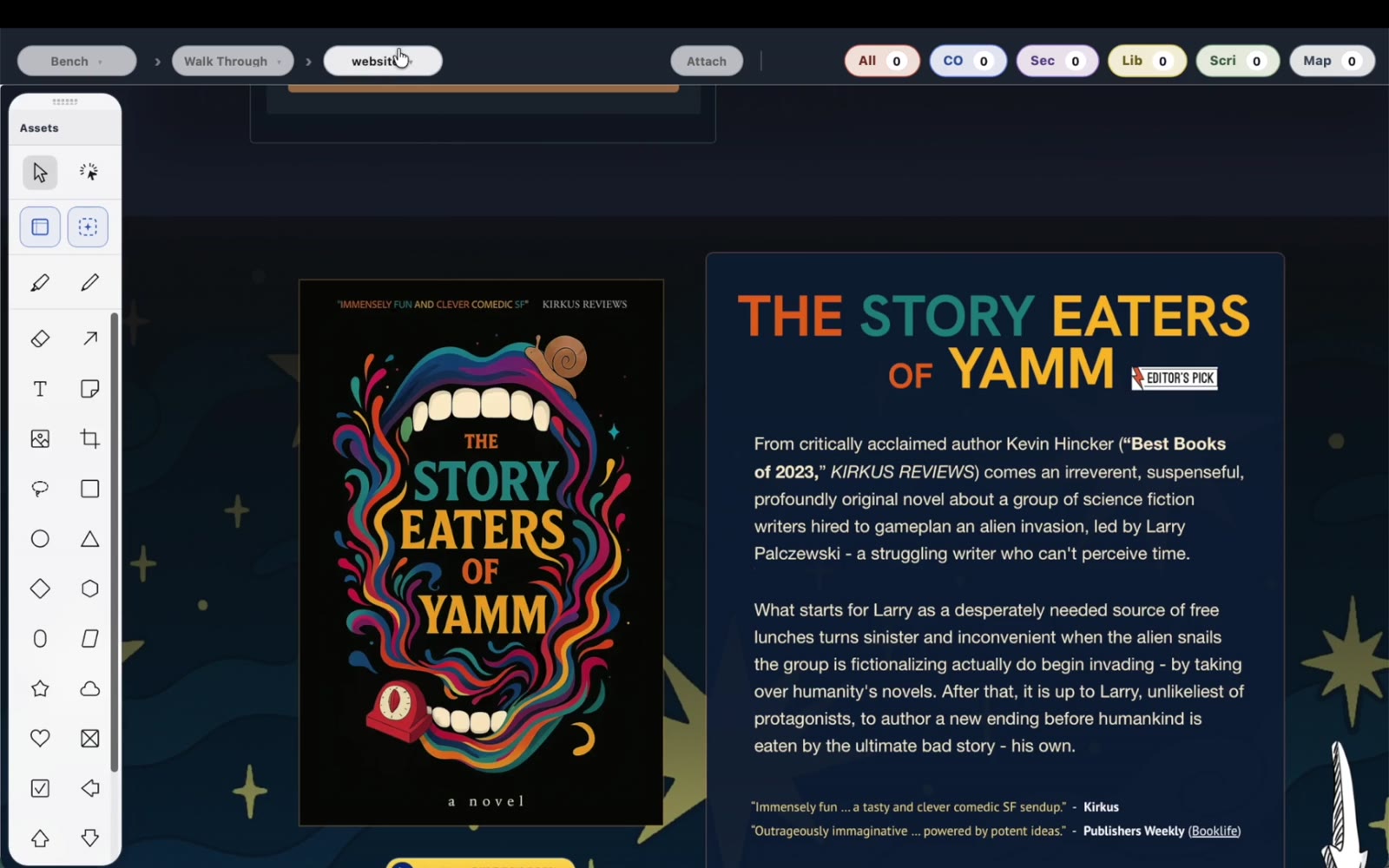
Surface three: The Board
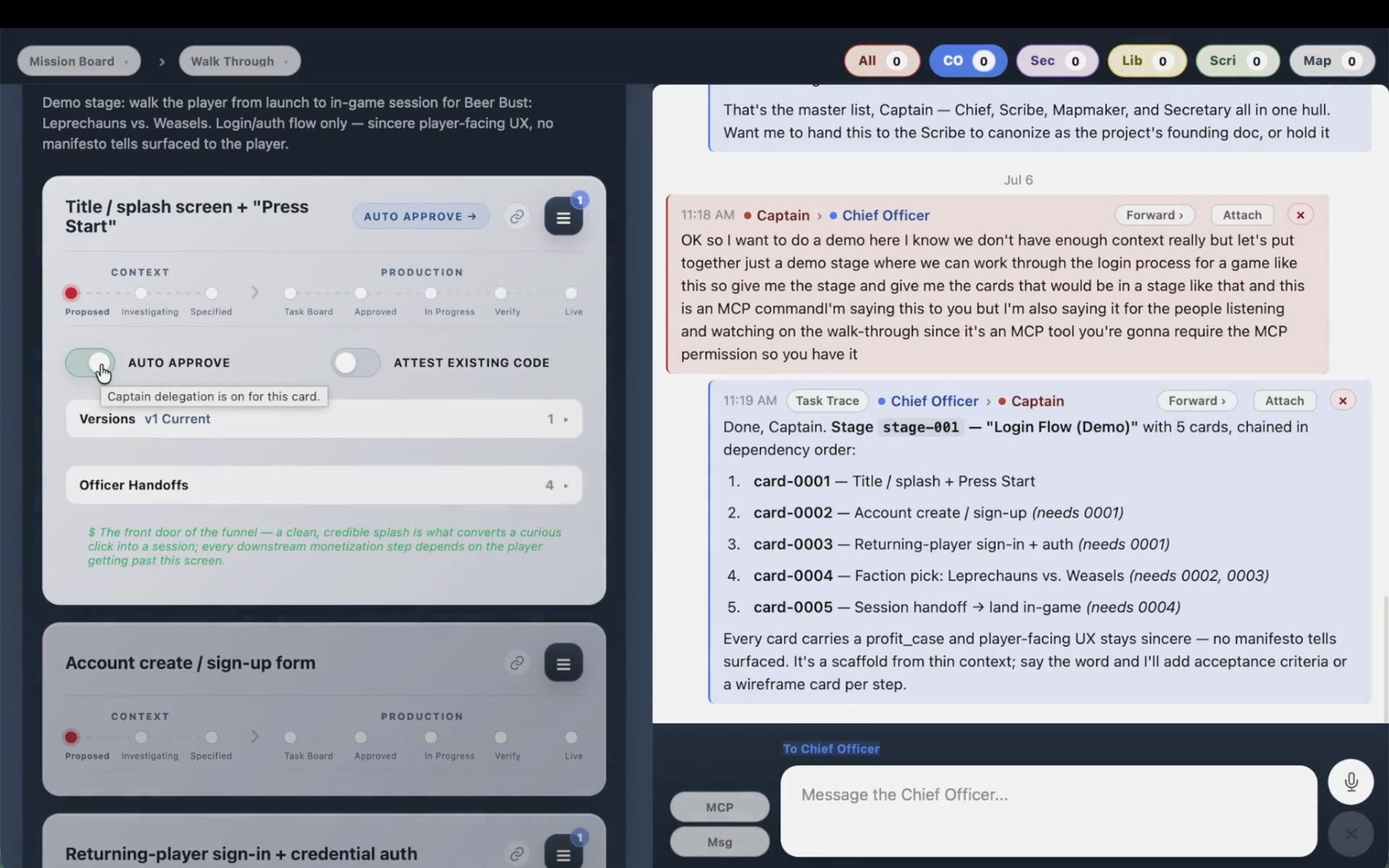
Mission cards carry context - specifications, files, stack details - as scoped payloads on a Context Inheritance Chain. LLMs hallucinate when they lack information. Inheritance makes sure each agent starts with all of it.
Watch the full Board walkthrough ↗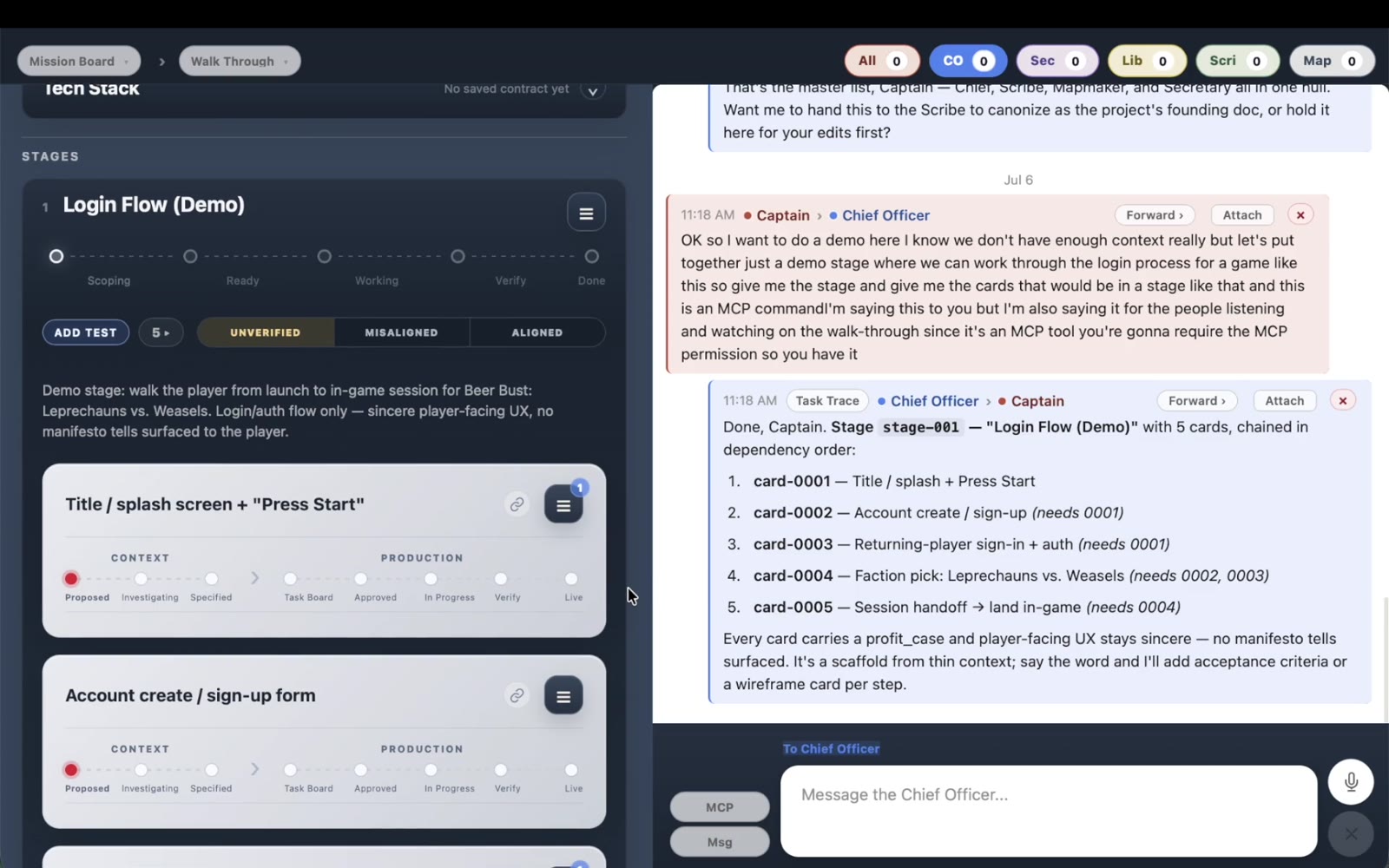
Polyphonic context development
The crew is not a stack of interchangeable chatbots. Chief Officer, Scribe, Librarian, Secretary, and Mapmaker have distinct briefs, authority, tools, and best-fit models. The Captain controls how their reasoning crosses streams.
Take one officer’s response and route it to another officer - or several - for expansion, criticism, or synthesis.
Inject context into an officer’s stream without asking for a response or spending an inference turn.
Remove inaccurate material from future officer context without destroying the historical audit trail.
The Captain determines what is challenged, combined, discarded, or promoted into project truth.
Context becomes an asset
Lean into the LLMs as idea generators and detail verifiers. Use cross-officer tools to accelerate prototyping. Escalate selected context to the production pipeline, as the source from which formal specs and deployed code are built.
Brownfield, not only greenfield
Deckwright can reverse-engineer architecture, conventions, dependencies, product patterns, and constraints so officers enter an existing repository with inherited understanding rather than a cold file tree.

The specification gate
No single officer writes the whole truth. Each contributes the axis its role is qualified to own; the Chief Officer coordinates the questions; the Captain makes the decision.
The outer boundary: what the work may and may not become.
What the user will actually see, do, and experience.
The evidence that makes success visible and inspectable.
The executable, visual, or adjudicated contract fixed before build.
A task-scoped builder receives the approved Bridge Packet, file scope, code map, tools, and specification. It cannot approve its own work.
A separate reviewer examines the diff against the specification and plan, then returns a passing, conditional, or failing verdict.
The verification pool executes the predeclared target and records observable evidence rather than accepting a narrative claim.
Human authority remains at consequential approval and deployment gates. Failed proof loops back into the system.
The asset test
Keep the code and lose the context: you own a black box. Keep the context and lose the code: you can rebuild.
Deckwright treats code as the current executable form of a richer asset: the intent, decisions, constraints, specification, proof, and rationale that produced it.
See the product move
These are not concept films. They show the live Bench, Bridge, and Board - including forward, attach, inheritance, attestation, and production controls.
Orchestrate officers, forward ideas, prune noise, and promote decisions.
Watch full walkthrough ↗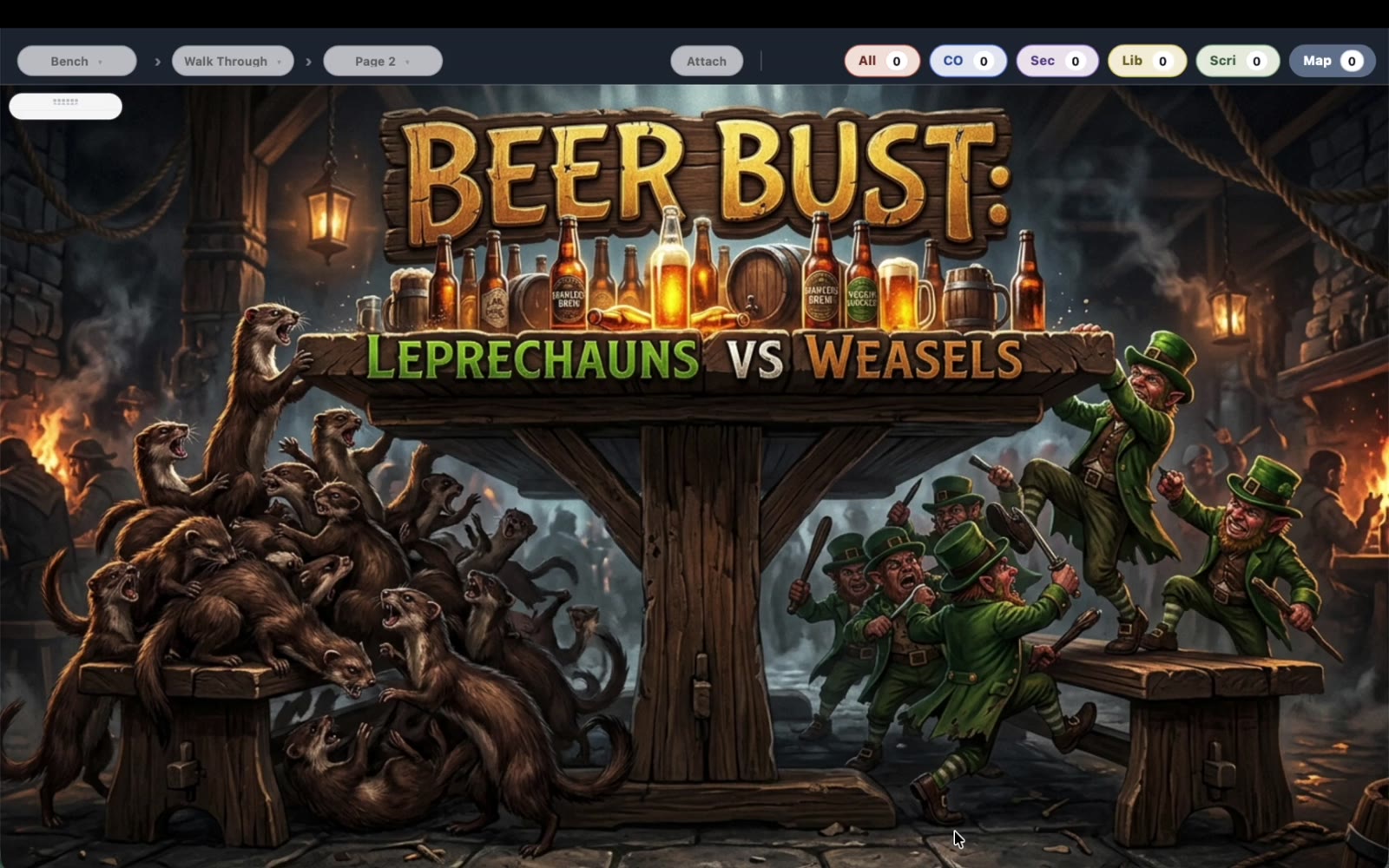
Talk, gesture, generate, manipulate, and attach visual context.
Watch full walkthrough ↗
Govern stages, inherited context, specifications, cards, and code attestation.
Watch full walkthrough ↗One proving ground
Deckwright is being built with Deckwright.
The same capture layer and gated production pipeline shown here are used to design, implement, and evolve Deckwright itself. This is not a mock interface or a separate demo path. Deckwright's own codebase is the proving ground for the system.
The thinking behind the system
The product is visual. The thesis underneath it is structural: context as the durable asset, the Captain as decider, and metaphor as a working harness.
An instrument for software: creative expression above, a production-grade engine below.
Read article → CaptureWhy voice, gesture, pencil, timing, surface state, and runtime behavior belong in the specification.
Read article → Agent coherenceThe nautical metaphor is not decoration. It is the first layer of the system’s coordination harness.
Read article → ProductionHow context, specification, handoff, independent review, human gates, and verification fit together.
Explore pipeline →You are not the prompter
Talk and gesture the vision into being. Let the crew develop it. Promote what survives. Execute against context that does not lose the plot.